
The most common texture type you'll encounter — particularly in homes built from the 1970s through the 1990s — is orange peel. The name is accurate: it looks like the skin of an orange, with a subtle bumpy pattern that catches light gently without being visually dominant. Orange peel is applied by spraying a thinned drywall compound and produces a fairly uniform, low-profile texture. It's popular because it's fast to apply, hides minor drywall imperfections effectively, and reads as a neutral background that doesn't call attention to itself. It works in most rooms and most architectural styles without creating friction. If you're trying to match existing texture in a repair or renovation, orange peel is statistically the one you're most likely to be dealing with.
What's the Difference Between Ceiling Texture Types and Which Should You Choose?
Ceiling texture is one of those decisions that affects how a room feels more than most people realize until they're standing in a space that got it wrong. The wrong texture in the wrong room makes ceilings feel lower, spaces feel dated, or finishes feel mismatched with everything else going on in the house. Getting it right isn't complicated, but it helps to understand what the options actually are and what each one does well before you hand a contractor a sprayer and tell them to go for it.
Ceiling Texture Types: How to Choose the Right One for Your Space
Get a Free Quote
Contact Us
Our Services
Contact us today for a FREE NO-OBLIGATION consultation and let us help you maintain and improve your property.

Satisfied Clients


Skip trowel texture is applied by hand — a trowel is used to apply irregular, overlapping patches of compound that create a varied, slightly Mediterranean feel. The pattern is less uniform than sprayed textures, which some people prefer because it reads as more artisanal and less production-built. Skip trowel tends to suit rooms with character — older homes, spaces with architectural details, rooms where a handmade quality fits the aesthetic. It takes longer to apply than spray textures and requires more skill to execute well, which affects cost and the quality variance between contractors. Done well it's beautiful; done poorly it looks like someone got interrupted mid-project.
Knockdown texture is the middle ground between orange peel and skip trowel in terms of visual presence. Compound is sprayed on and then lightly flattened with a knife before it dries, creating irregular flat islands of texture with recessed areas between them. The result is more visually interesting than orange peel but more uniform than skip trowel. It's become increasingly common in newer construction and renovations and tends to work well in contemporary and transitional interiors. Matching knockdown texture for repairs requires some practice — the timing of when you flatten the compound affects the look significantly, and inconsistent application shows.
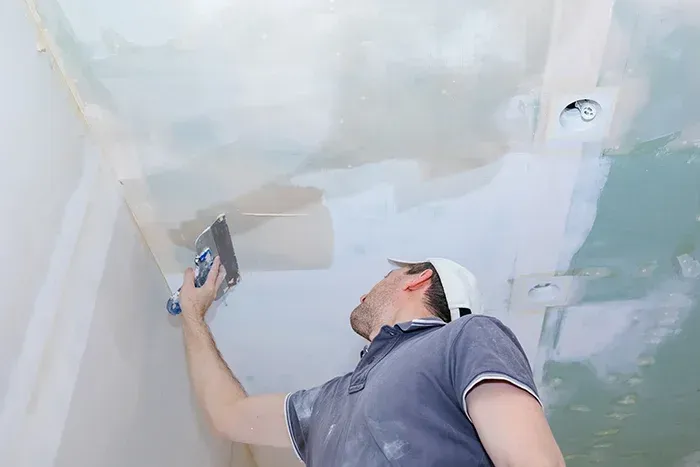
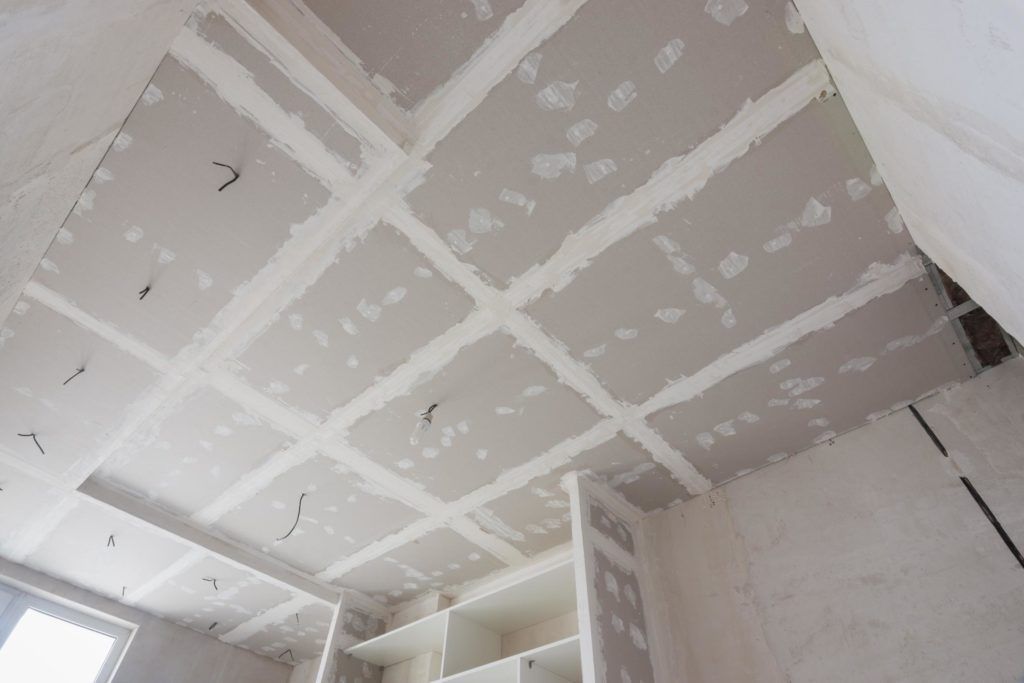
Smooth finish is technically the absence of texture, but it belongs in the ceiling texture types conversation because choosing it is a legitimate decision with real implications. A smooth ceiling is the most demanding finish to execute well — every imperfection in the drywall is visible because there's no texture to obscure it — and it costs more in labor because of the additional skim coating and sanding required. But in the right spaces, particularly modern and contemporary interiors, high-ceilinged rooms, and formal living and dining areas, a smooth ceiling is simply the most appropriate choice. It reflects light cleanly, photographs beautifully, and feels sophisticated in a way that textured ceilings don't.
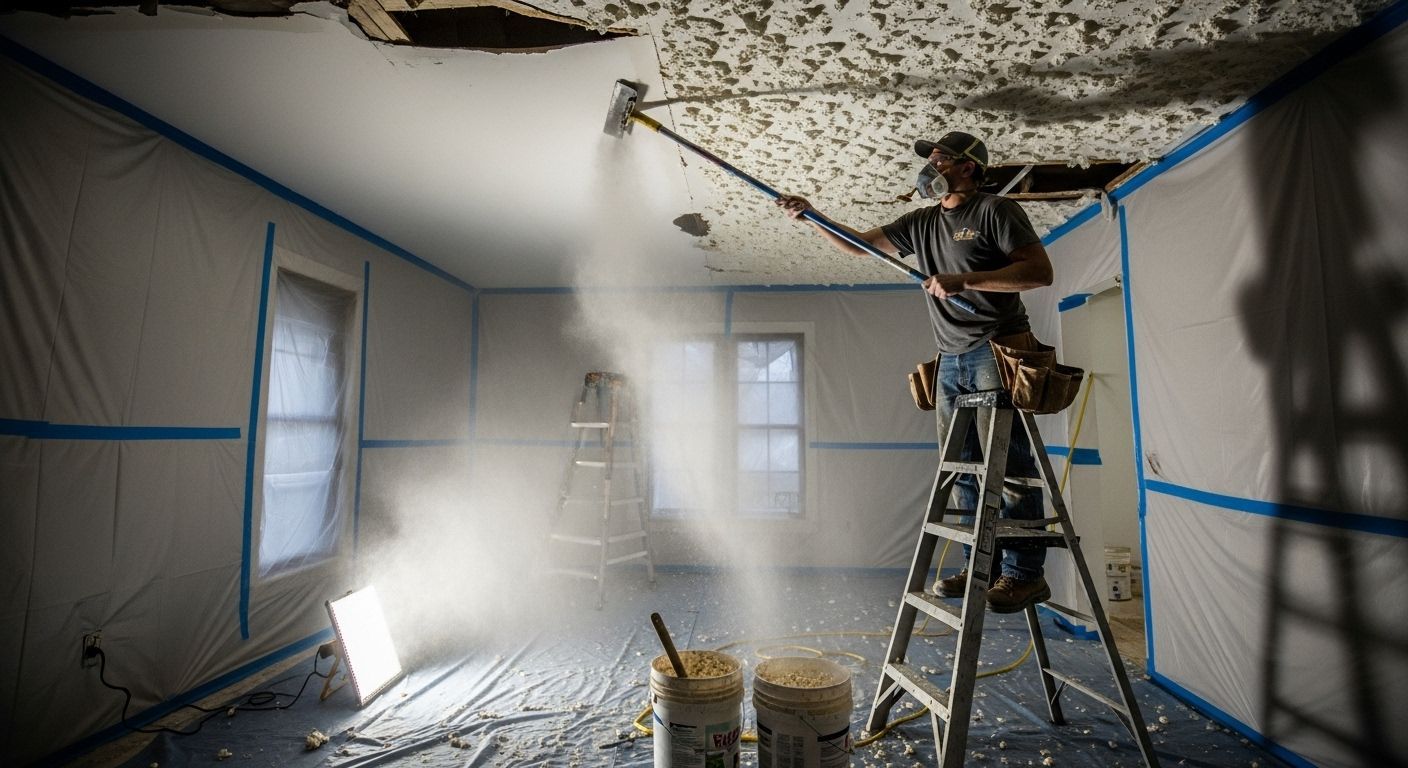
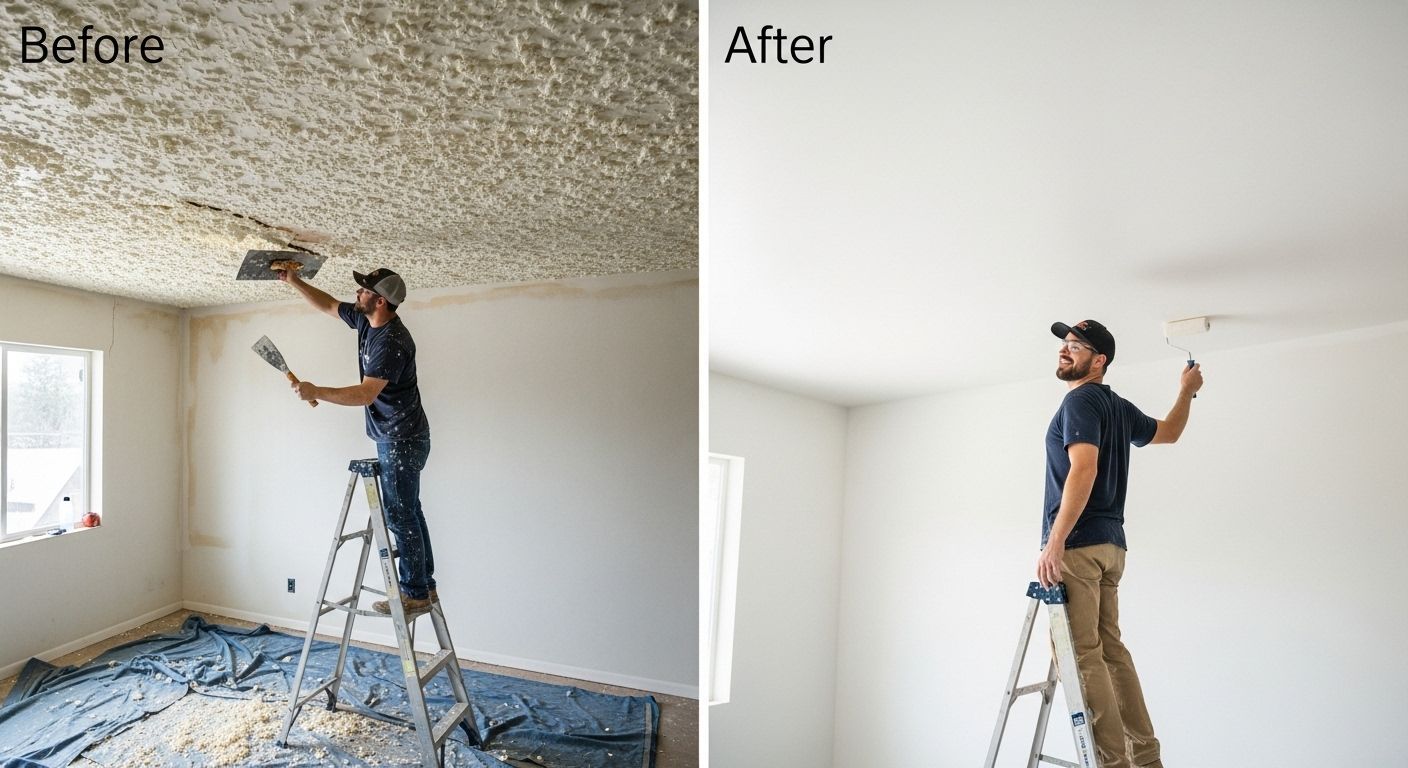
Popcorn texture deserves mention because so many homes still have it, even though almost no one chooses it intentionally anymore. Popcorn — also called acoustic texture — was applied by spraying a thick compound mixed with styrofoam or paper particles, producing a highly irregular, heavy texture that was popular from the 1950s through the 1980s. It was cheap, fast, hid imperfections aggressively, and had some acoustic dampening properties. It's now considered dated, difficult to repair seamlessly, and — in older applications — potentially containing asbestos. The question with popcorn isn't which ceiling texture type to choose so much as whether to remove it, which is its own project with its own cost considerations.
When thinking through ceiling texture types and which to choose for your specific situation, the most useful questions are: what's the architectural character of the house, what's the ceiling height, and how much visual activity is already happening in the room. Rooms with lots of visual complexity — bold patterns, busy millwork, dramatic lighting — tend to benefit from quieter textures or smooth ceilings that don't add another layer of visual noise. Simpler rooms can handle more texture without feeling overwhelming. Low ceilings generally do better with finer, lighter textures that don't visually compress the space further.
Matching existing texture is its own constraint that often overrides aesthetic preference — if the rest of your home has knockdown texture and you're renovating one room, consistency usually wins over introducing something different. But if you're starting fresh or doing a whole-house renovation, it's one of the more impactful finish decisions you'll make, and it's worth choosing with intention rather than defaulting to whatever's fastest.
Popcorn Ceiling Removal Near Me? Austin Ceiling Pros Serves More Than Just Austin
Austin, TX
Round Rock, TX
Cedar Park, TX
Pflugerville, TX
Georgetown, TX
Leander, TX
Lakeway, TX
=
Bee Cave, TX
Kyle, TX
Buda, TX
Dripping Springs, TX
Hutto, TX
Liberty Hill, TX
Manor, TX