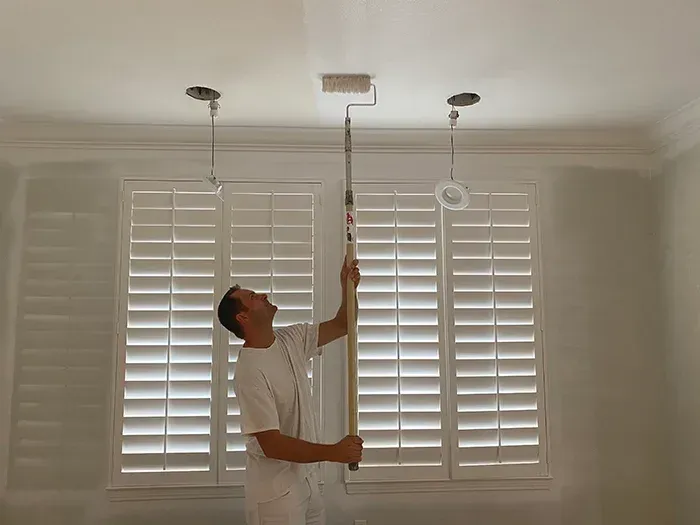
When painting over it will make things worse
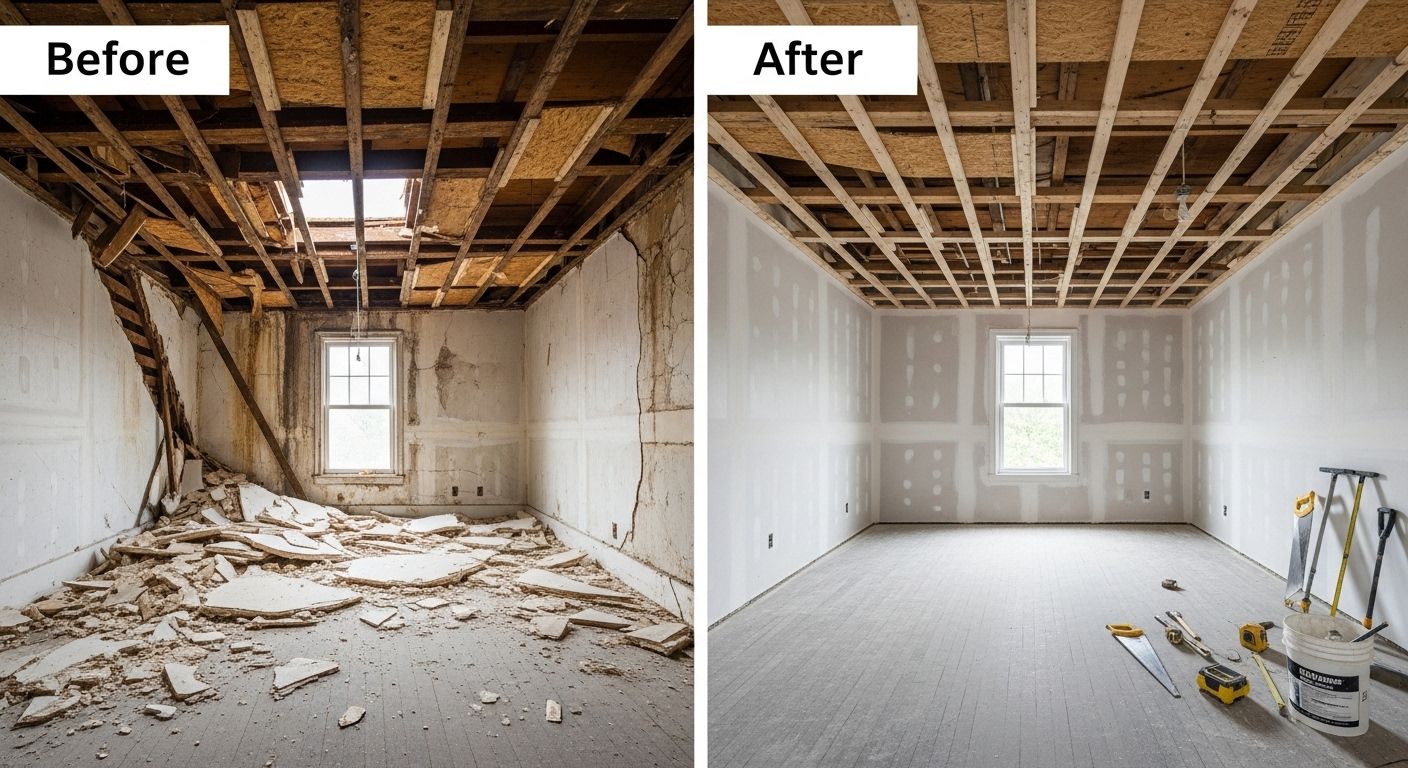
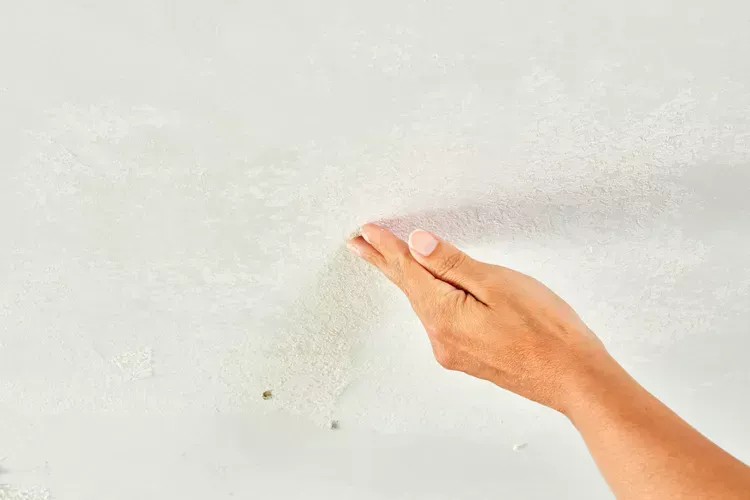
The problem comes when you try to paint over texture that's hiding problems or is already failing. Old popcorn texture that's become brittle and partially detached will not improve with a coat of paint — the added moisture from the paint can actually accelerate the peeling, and you'll end up with chunks coming down onto fresh paint. If you press lightly on your texture and it flakes or crumbles, painting over it is a short-term fix that creates a longer-term mess.
Water-stained texture is another situation where paint alone will disappoint you. Even with a quality stain-blocking primer — which you absolutely need before painting over any water stain — texture that has been saturated tends to look uneven and patchy because the damaged areas absorb paint differently than the surrounding surface. You can seal it, but you can't fully disguise it without addressing the texture itself.
And if the honest answer is that you don't like the texture and want something smoother and cleaner, no amount of paint will get you there. Paint follows the surface it's on. If the surface has a heavy knockdown pattern or thick popcorn, paint makes it a freshly painted heavy knockdown pattern or freshly painted thick popcorn. The texture isn't going anywhere.
When resurfacing is worth the effort
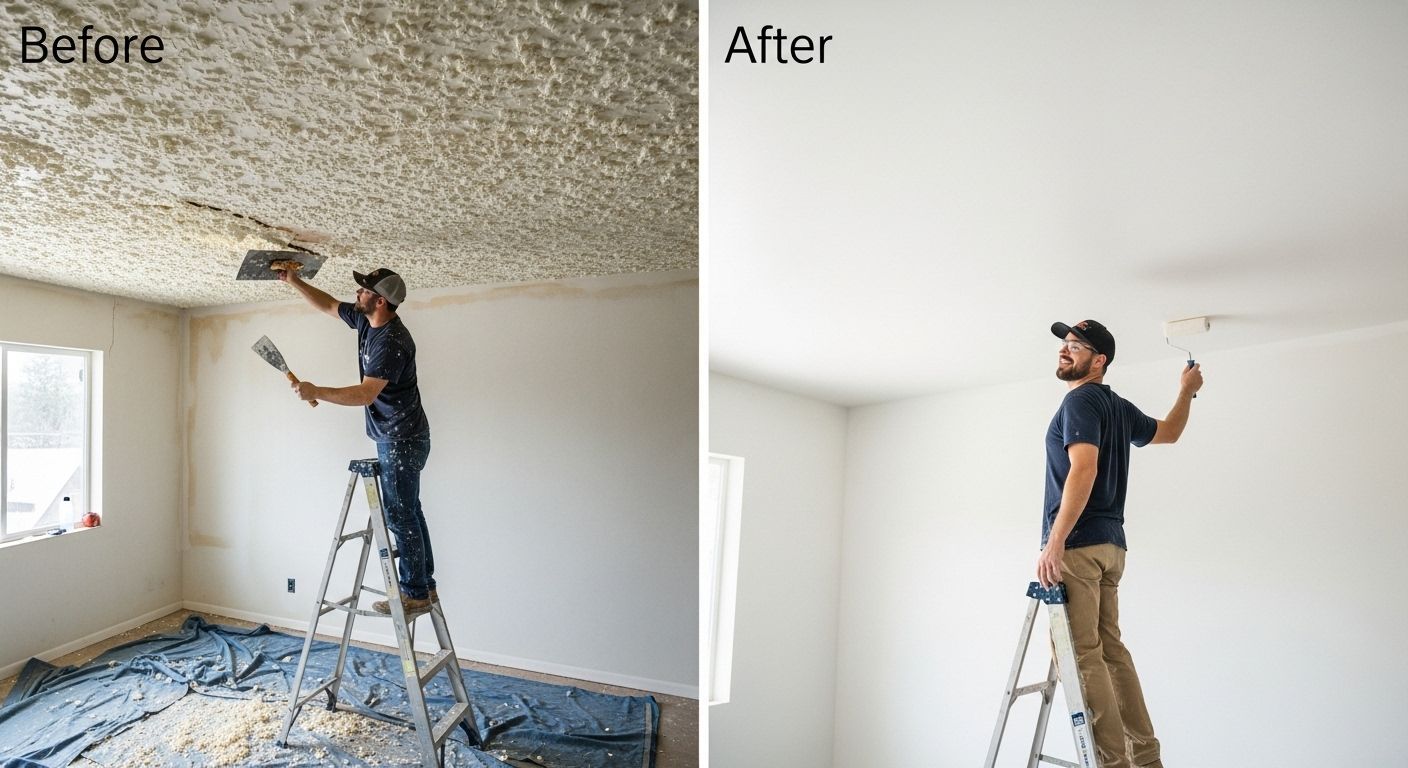
Deciding whether to paint over a textured ceiling or resurface it really comes down to one question: are you trying to change the surface, or just refresh it? If you want smooth, you have to resurface. There's no shortcut.
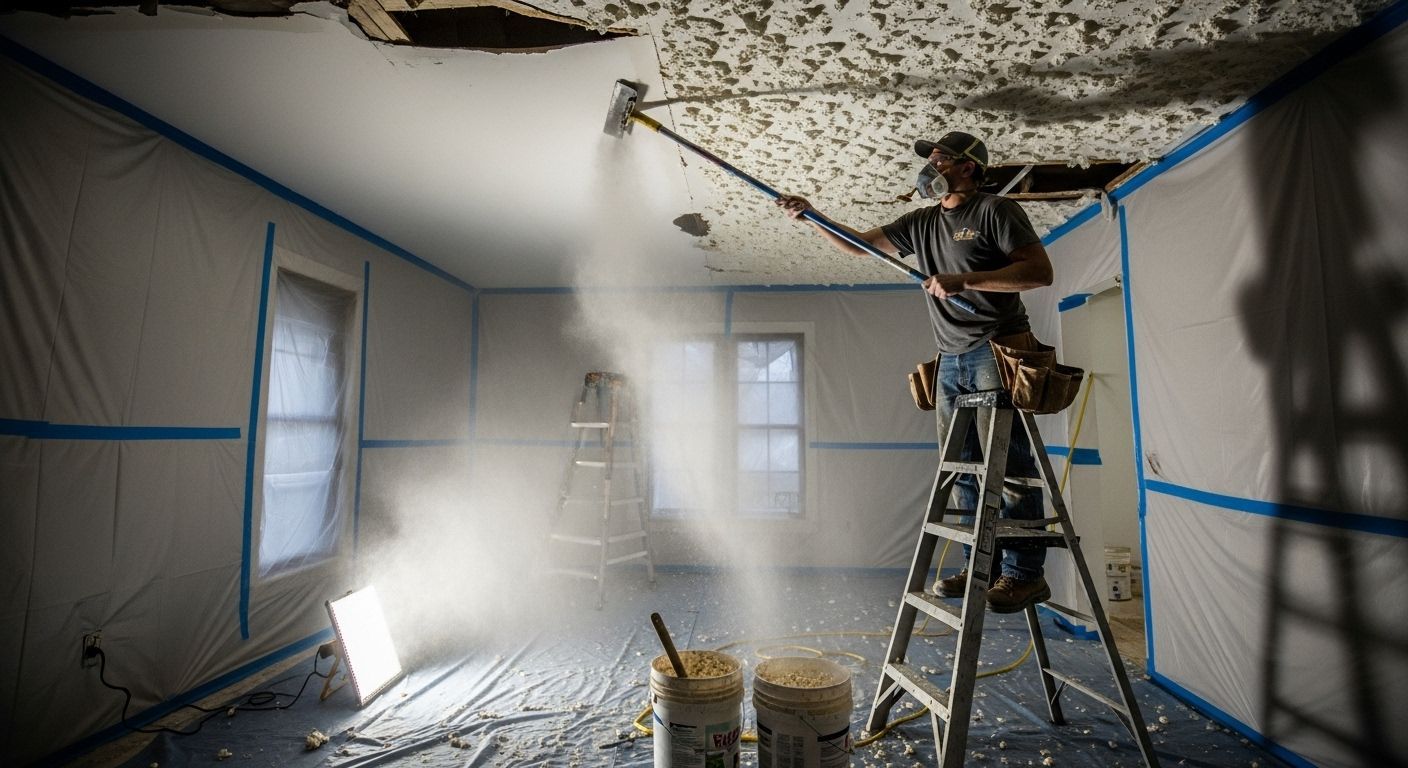
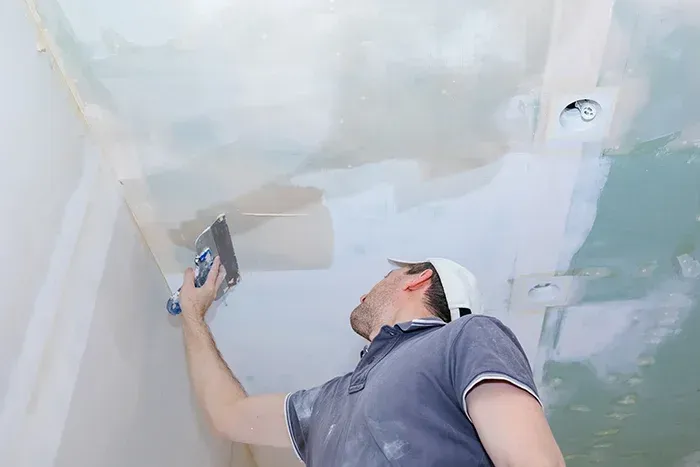
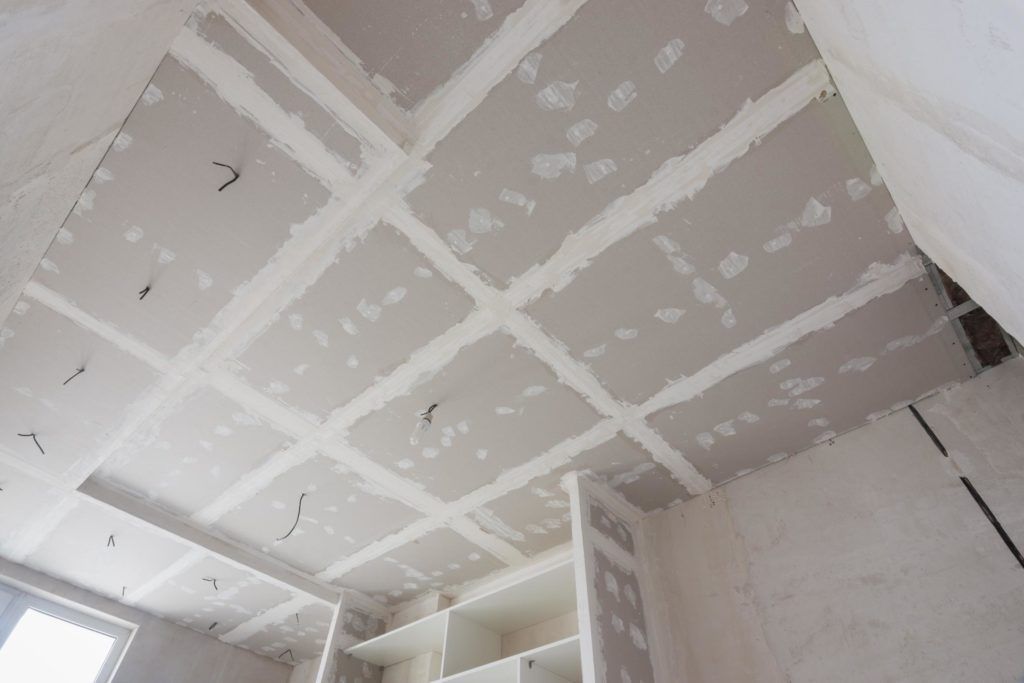
Resurfacing means either scraping off the existing texture and skim coating the bare drywall or plaster underneath, or skim coating directly over the existing texture if it's stable enough to hold a new layer. Scraping first is more labor but gives a better foundation. Skim coating over existing texture can work if the texture is thin and firmly adhered, but it requires more compound and more passes to truly flatten the surface.
The payoff for resurfacing is significant. A properly skim coated ceiling looks finished in a way that textured ceilings simply don't — especially in rooms with good natural light or visible light fixtures that rake across the surface at an angle. Light is merciless on bad texture and invisible on a flat, smooth ceiling.
Resurfacing is also the right move when you're doing a larger renovation anyway. If you're replacing flooring, painting walls, updating trim — the ceiling is already going to look out of place next to the improved surroundings. Better to do it while the room is disrupted than to come back to it in two years.
The honest middle ground
There's a version of this that doesn't have to be all or nothing. If one ceiling in your house has minor popcorn in decent condition and you just want it freshened up, paint it. If the primary bedroom has heavy texture you've always hated and the room is due for a refresh anyway, resurface it.
The decision to paint over a textured ceiling or resurface really deserves a room-by-room evaluation rather than a whole-house policy. The condition of the texture, your tolerance for the look, and how much the space matters to daily life are all legitimate inputs. Make the call on each room's merits, and you won't end up with regrets in either direction.