Faux beams do more than you'd expect
Exposed ceiling beams signal craftsmanship and age in a way that almost nothing else does. Real structural beams aren't an option in most homes, but hollow faux beams made from polyurethane or thin-wrapped wood boxes can be nearly indistinguishable once painted or stained.
A set of three parallel beams running the length of a living room or kitchen can completely reframe a flat ceiling and add significant visual height at the same time. The trick is spacing them based on the room's proportions rather than evenly dividing the ceiling — three beams that feel right visually usually aren't perfectly equidistant. A good rule of thumb is to avoid having beams run directly over the center of the room, which can feel heavy.
Polyurethane beams from companies like Ekena Millwork are lightweight enough to install without structural support and start around $50 to $80 per beam, making a full room treatment possible for a few hundred dollars. Wood box beams made from 1x boards are even cheaper if you're willing to build them yourself.
Board and batten, applied upward
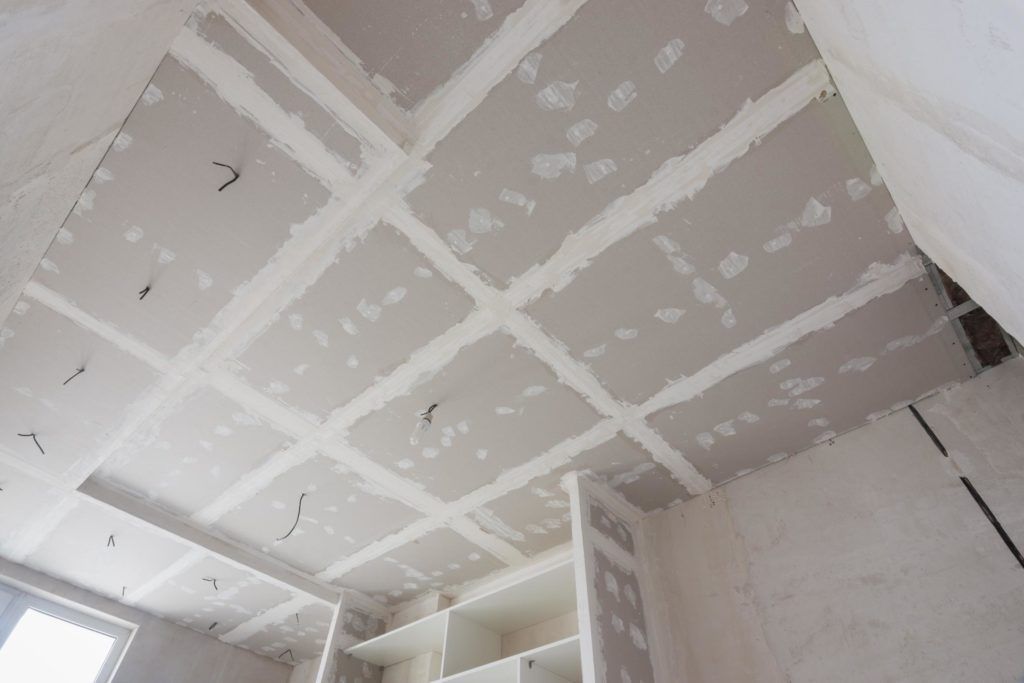
If you've seen board and batten on walls and liked it, the same approach works on ceilings with a slightly different effect. Running narrow wood strips in a grid pattern across a flat ceiling — essentially creating shallow coffers — adds texture, geometry, and a sense of craftsmanship that a flat ceiling simply can't match.
The grid doesn't need to be elaborate. A simple pattern using 1x3 or 1x4 boards painted the same color as the ceiling reads as architectural detail from a distance without drawing too much attention to itself up close. In a dining room or a primary bedroom, a board-and-batten ceiling grid painted a deep color — navy, forest green, charcoal — can anchor a space beautifully and make the room feel much more intentional than its square footage suggests.
Medallions and center features
If beams or grids feel like too much commitment, a ceiling medallion around a light fixture is a low-cost, low-effort way to add a focal point. Polyurethane medallions cost $20 to $80, take an hour to install, and give a plain ceiling a classical reference point that makes light fixtures look more deliberate.
For a bigger statement, a simple painted design — a geometric border, a tray effect created with paint alone using taped-off lines, or even a mural in the right room — can add architectural interest to a flat ceiling on a budget without touching a single physical material. Paint is forgiving and reversible in a way that millwork isn't, which makes it especially good in rented spaces or rooms you're not fully committed to yet.
The ceiling is the one surface in a room that nobody's furniture competes with. It's open canvas, and most of the techniques that make it interesting are more approachable than they look. Pick the one that matches your room's personality and your actual weekend availability, and the flat, forgotten ceiling becomes one of the best decisions you made in the whole space.