Texture changes matter as much as color
Paint that's bubbling, peeling, or blistering on a ceiling is almost always water-related. The moisture gets between the paint and the substrate and breaks the bond. You might see this before you see any discoloration, especially if the leak is recent or slow.
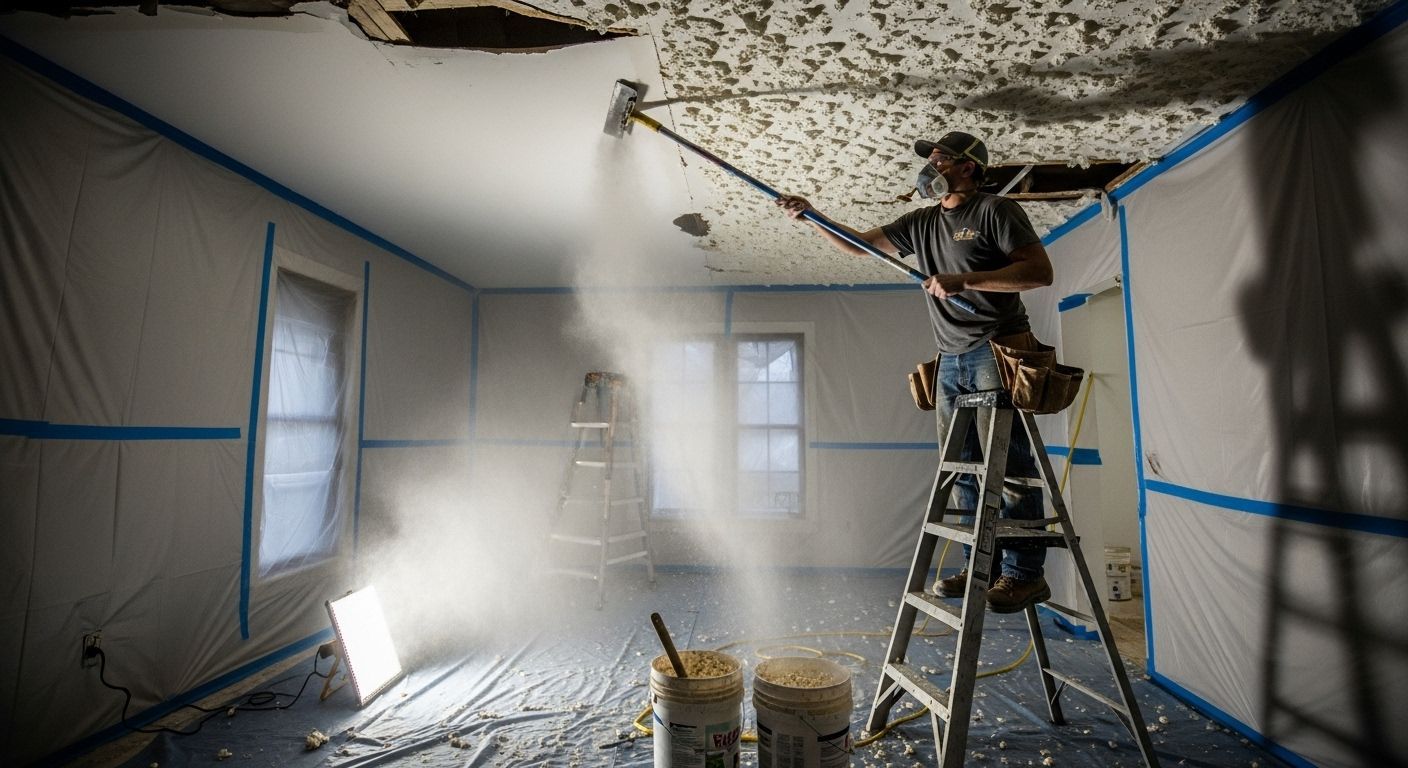
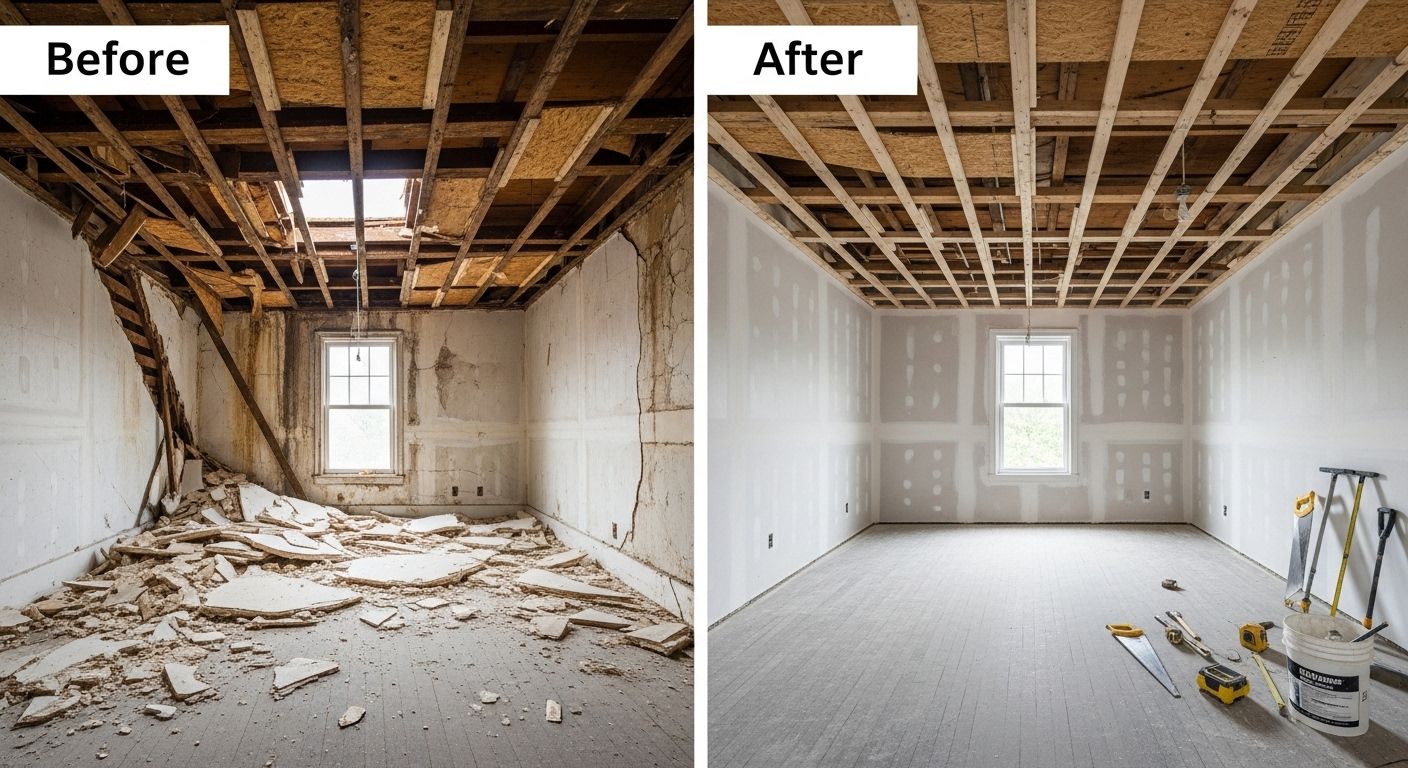
Sagging is more serious. When drywall absorbs enough water, it softens and the weight of the saturated material pulls it downward. A ceiling that looks bowed or has a soft spot when you press gently — don't press hard — has taken on significant moisture. That's not a cosmetic issue anymore; saturated drywall loses structural integrity and can fail, and the material almost always needs to be replaced rather than dried out and painted over.
Plaster ceilings behave a little differently — they're more rigid and less likely to sag, but they'll crack in patterns around water-damaged areas and sometimes develop a chalky or powdery texture where mineral deposits have leached through.
Don't ignore what you can smell
Musty odors in a room without obvious ventilation problems are a meaningful signal, especially if the smell is stronger in one area or seems to come from above. Mold can begin colonizing wet drywall within 24 to 48 hours of water exposure, and it often establishes in the ceiling cavity before you see any visual signs on the surface. If a room smells like a wet basement and there's no reason for it, look up.
How to check more carefully
If you see any of the signs above and want to assess further before calling someone, a few things help. A moisture meter — available at hardware stores for around $20 to $30 — can tell you whether a suspicious area is actually holding moisture or just stained from an old, dry event. Press the probes lightly against the ceiling surface; elevated readings confirm active moisture even if the area looks dry to the eye.
If you have attic access above the suspect area, a flashlight inspection after a rain is informative. Look for water stains on the underside of the roof decking, wet insulation, or daylight coming through where it shouldn't. A slow roof leak that only shows up during specific rain directions or temperatures can be maddeningly difficult to trace, but getting above the ceiling is usually more useful than staring at it from below.
When to stop investigating and call someone
Knowing how to tell if a ceiling has water damage is useful — but there's a point where the investigation becomes a job for a professional. If you see active dripping, significant sagging over any area, or visible mold growth rather than just a stain, stop poking at it and get a contractor or water damage specialist involved. Saturated drywall that falls can carry a lot of weight with it, and disturbing mold without proper containment spreads spores through the rest of the house.
The earlier you catch it, the more options you have. A small stain investigated promptly might mean a simple patch after fixing the source. The same stain ignored for a season can mean replacing drywall, insulation, and dealing with mold remediation. Water damage doesn't wait, and neither should you.